
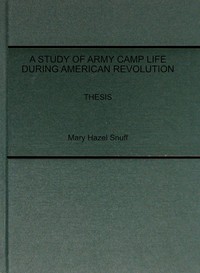
A Study of Army Camp Life during American Revolution by Mary Hazel Snuff
Mary Hazel Snuff's A Study of Army Camp Life during American Revolution does something brilliant: it ignores the battlefields for a while and sets up camp with the people who lived the war day in and day out. This isn't a marching timeline of events. Instead, it's a deep, patient look at the ecosystem that surrounded the fighting army.
The Story
There isn't a single plot, but there is a compelling narrative about human endurance. The book is structured around the components of camp life. We start with the sheer logistics of moving and setting up a 'city' of thousands of people every few weeks. Then, we get into the nitty-gritty: the struggle for decent food and clean water, the horrifying conditions in medical tents, and the constant threat of disease. But it's not all misery. Snuff shows how soldiers and camp followers built a society. They played games, wrote letters, faced courts-martial for petty crimes, and celebrated holidays as best they could. The 'story' is how these communities functioned—and often barely functioned—under immense strain, revealing that the war was won as much by stubborn daily persistence as by any single charge.
Why You Should Read It
This book makes history feel real in a way few others do. You stop seeing the Continental Army as a faceless force and start seeing a bunch of cold, hungry, homesick individuals. Snuff has a real talent for finding the small, telling details in her sources—a soldier complaining about his lice-ridden shirt, a wife bargaining for soap, a description of a makeshift baseball game. These moments are gold. They dismantle our romantic notions without diminishing the soldiers' sacrifice. In fact, understanding the relentless discomfort and boredom makes their commitment more impressive, not less. It adds a layer of profound respect for the sheer grit of everyone involved.
Final Verdict
Perfect for history buffs who are tired of the same old stories and want to get their boots muddy. It's also fantastic for anyone who loves social history or wonders about the lived experience of people in the past. The writing is clear and engaging, though it's packed with information, so it's best taken in chunks. If you've ever watched a historical drama and thought, 'But what did they *eat*?', this book is your answer. It's an essential, ground-level companion to any grand history of the American Revolution.
This digital edition is based on a public domain text. It is available for public use and education.
Michelle Jackson
1 year agoVery helpful, thanks.
Ashley Thomas
2 months agoI had low expectations initially, however it challenges the reader's perspective in an intellectual way. Exactly what I needed.
Nancy Miller
3 months agoThe layout is very easy on the eyes.


Mark Smith
11 months agoVery helpful, thanks.