
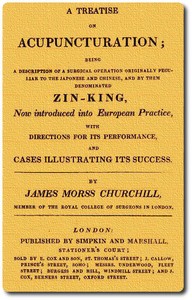
A Treatise on Acupuncturation by James Morss Churchill
Published in 1821, this book is James Morss Churchill's passionate argument for bringing acupuncture to Western medicine. At the time, most European doctors viewed it as a bizarre Eastern curiosity, if they thought of it at all. Churchill wrote this treatise to change their minds.
The Story
The book isn't a novel with a plot, but it has a clear narrative drive: one man's mission. Churchill starts by laying out what acupuncture is, describing the needles and the basic principles he understood from Chinese practice. But the real story unfolds as he presents his case studies. He details specific patients—people suffering from rheumatism, chronic pain, even deafness—and describes how he inserted needles and what happened next. Page by page, he builds his evidence, reporting successes and honestly noting failures. He's trying to prove, through careful observation, that this method works. The conflict is between his growing conviction and the established medical wisdom of his day, which relied heavily on bloodletting and harsh purges. The book is his direct appeal to logic and results over tradition.
Why You Should Read It
Reading this is a unique experience. You're not getting a modern, polished science lesson. You're getting a front-row seat to a moment of discovery. What struck me most was Churchill's voice. He's clearly frustrated by the closed-mindedness around him, but he remains doggedly earnest. He writes with the hope of a convert, wanting to share a tool he believes can relieve suffering. It’s humbling to see how he grappled with concepts without our modern knowledge. His explanations for why it worked are often rooted in the science of his time, which makes his accurate clinical observations even more fascinating. It reminds you that good medicine often starts with someone simply noticing, 'Hey, this seems to help,' and having the courage to say so.
Final Verdict
This book is perfect for history buffs, especially those interested in medicine or the cross-cultural exchange of ideas. It’s also great for anyone in healthcare who wants a profound look at the roots of integrative medicine. If you enjoy primary sources that let you touch the past directly, Churchill’s passionate, slightly scrappy treatise is incredibly rewarding. It’s not a light read, but it’s a short and powerful one. You come away not just learning about acupuncture's introduction to the West, but meeting the determined man who carried the needles.
This book is widely considered to be in the public domain. Share knowledge freely with the world.
Liam Gonzalez
11 months agoJust what I was looking for.
Nancy Martin
10 months agoIf you enjoy this genre, the narrative structure is incredibly compelling. I learned so much from this.
Elijah Moore
4 months agoI was skeptical at first, but the depth of research presented here is truly commendable. I learned so much from this.
Ashley Wright
1 year agoFrom the very first page, the pacing is just right, keeping you engaged. Don't hesitate to start reading.




Susan Hernandez
1 year agoNot bad at all.