About 59 minutes
Cat and Mouse — Background and Themes
Other Worlds
13,472 recorded words. 14 minutes difference from this book's estimate.
View Gutenberg source #24392
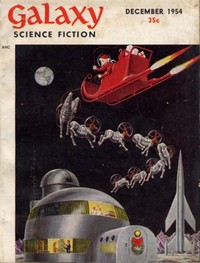
The source record for Collector's Item — A Reader’s Guide measures this digital text at 16,724 words, 1 hr 13 min estimated reading time, and 2 detected text sections.
The text analysis averages about 12.9 words per sentence, while the detected sections provide another way to judge how the source is divided.
Project Gutenberg metadata also associates the work with “Science fiction,” connecting these edition facts with the source record’s subject description.
Explore this collection
These alternatives are selected using recorded categories and estimated reading time.
About 59 minutes
Other Worlds
13,472 recorded words. 14 minutes difference from this book's estimate.
View Gutenberg source #24392About 50 minutes
Other Worlds
11,275 recorded words. 23 minutes difference from this book's estimate.
View Gutenberg source #24558About 47 minutes
Other Worlds
10,588 recorded words. 26 minutes difference from this book's estimate.
View Gutenberg source #31215Search stored excerpts and compare books → Choose by your preferences →
Choices use stored catalog measurements. Estimates vary with reading speed. A shared category is a catalog label, not a claim that two books have the same argument or literary quality.
Search reads excerpt text stored with this catalog and links to its associated Gutenberg record. The connection is stored in the site database; this tool does not recheck that every excerpt is word-for-word identical to that external record. Excerpt search does not cover every chapter and does not verify historical publication dates.
Catalog snapshot checked: 2026-09-26. Coverage: 96 public books, 96 available source excerpts.
Calculated from edition completeness, EPUB availability, text structure and catalogue metadata. Not a user rating.
Total of 100 points, scaled to a 2.5-5.0 range. Editions with an empty description or a missing EPUB file are not scored.
Public-domain source text
The source text is kept in the dedicated reader, separate from this catalogue record and its commentary.
The opening scene of Collector's Item establishes its tone with a grotesque joke: Professor Bernardi wonders aloud whether the lizard-man carrying off Miss Anspacher intends to eat her or make love to her, adding that in the latter case, “it may be her only chance.” The line is typical of the story’s blend of peril and sardonic humor. The Venusian jungle is described as “steaming, odorous,” with “pale, malevolent vines,” yet the characters’ primary concern is often social propriety—Mortland insists on giving the kidnapper “a sporting chance” before firing his weapon. This tension between physical threat and comic detachment runs through the excerpts.
The characters repeatedly treat survival as an inconvenience that interferes with civilized rituals. Mortland’s first thought upon finding dry ground is to make tea: “How long can one go on living without tea?” The narrative voice—filtered through Mrs. Bernardi’s thoughts—calmly considers drawing straws to decide who gets eaten, then reassures itself that eating the alien Jrann-Pttt “wouldn’t really be cannibalism. They aren’t people.” Jrann-Pttt’s telepathic reply—“your species will prove far easier to peel for the cooking pot”—inverts the logic. The story uses cannibalism as a running joke that also exposes the arbitrariness of the characters’ categories of personhood.
Algol the cat repeatedly outshines the human scientists. While the party trudges through mud for six hours, Algol has been walking on a dry ridge just meters away. Mrs. Bernardi’s outburst—“Scientists! Professors! … Did anybody think to look for dry ground? No!”—is one of the few moments where the narrative openly mocks the characters’ competence. The cat’s indifference to human drama (he “indignantly straightened a whisker she had crumpled”) provides a silent counterpoint to the humans’ frantic chatter. In a story full of verbal sparring, Algol’s non-verbal pragmatism suggests that intelligence may be less about degrees and more about observation.
Jrann-Pttt, the lizard-man, communicates telepathically, yet he finds human speech exasperating: “I have never known any species to use any method of communication so much in order to communicate so little.” The line is a meta-commentary on the story’s own dialogue-heavy style. The humans talk endlessly—about Miss Anspacher’s Ph.D., about tea, about who will be eaten—while failing to notice the dry ground or the cat’s whereabouts. Jrann-Pttt’s telepathy, by contrast, allows him to sense Algol’s “thought-stream” even when the cat is out of sight. The story thus contrasts the noise of human conversation with the efficiency of direct mind-to-mind contact, even as it uses that noise for comic effect.
The excerpts offer a story that is less about Venusian adventure than about the absurdity of carrying Earthly social hierarchies into an alien environment. Readers should pay attention to who gets the last word in each exchange—often it is not a human. The cat, the alien, and the narrative voice itself all undercut the characters’ self-importance. The humor is dry, the threats are real, and the ending (not shown here) may resolve the central tension between manners and survival in a way that rewards careful attention to the story’s early clues.
Reading about the expedition’s petty squabbles, I thought of my old university tutor, who’d argue about anything just to feel alive. The lizard-man felt less alien than the humans. Something in Smith’s bleak humor reminds me of the quiet dread in Pushbutton War — Reading Notes, where the machines win by letting us be ourselves. A chill, that.
Use these questions to collect your thoughts before moving on.









