About 44 minutes
Atom Drive — A Closer Reading
Space Future
10,013 recorded words. 0 minutes difference from this book's estimate.
View Gutenberg source #32067
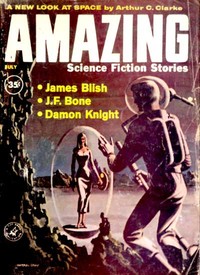
The catalog record for Noble Redman — Themes and Context provides practical reading context through 10,049 words, 44 min estimated reading time, and 1 detected text section.
The text analysis averages about 13.6 words per sentence, while the detected sections provide another way to judge how the source is divided.
Project Gutenberg metadata also associates the work with “Science fiction,” connecting these edition facts with the source record’s subject description.
Explore this collection
These alternatives are selected using recorded categories and estimated reading time.
About 44 minutes
Space Future
10,013 recorded words. 0 minutes difference from this book's estimate.
View Gutenberg source #32067About 43 minutes
Space Future
9,759 recorded words. 1 minutes difference from this book's estimate.
View Gutenberg source #23408About 43 minutes
Space Future
9,731 recorded words. 1 minutes difference from this book's estimate.
View Gutenberg source #31307Search stored excerpts and compare books → Choose by your preferences →
Choices use stored catalog measurements. Estimates vary with reading speed. A shared category is a catalog label, not a claim that two books have the same argument or literary quality.
Search reads excerpt text stored with this catalog and links to its associated Gutenberg record. The connection is stored in the site database; this tool does not recheck that every excerpt is word-for-word identical to that external record. Excerpt search does not cover every chapter and does not verify historical publication dates.
Catalog snapshot checked: 2026-09-26. Coverage: 96 public books, 96 available source excerpts.
Calculated from edition completeness, EPUB availability, text structure and catalogue metadata. Not a user rating.
Total of 100 points, scaled to a 2.5-5.0 range. Editions with an empty description or a missing EPUB file are not scored.
Public-domain source text
The source text is kept in the dedicated reader, separate from this catalogue record and its commentary.
The narrator, a cynical Martian guide, opens with a confession: "pair of words I heartily detest are noble and redman, particularly when they occur together." This sardonic voice immediately establishes the story's tone—a blend of self-deprecating humor and hard-boiled observation. The narrator's profession, guiding tourists through the ruins of K'nar, and his casual mention of photographing a Sand Nan feeding on a Centaurian client, signal a world where violence and commerce are routine. The prose is lean, colloquial, and unafraid of dark comedy, as when he notes that the female tourist "kept screaming right up to the end."
The narrator's first-person account is the story's engine. His diction is informal and peppered with slang—"well-heeled," "damndest guy," "repulsive little weasel"—which lends authenticity to his role as a jaded guide. He addresses the reader directly, as if telling a story in a bar, and his asides ("It gets you out of all sorts of legal complications later") reveal a pragmatic, morally flexible character. This voice contrasts sharply with the earnestness of Noble Redman, whose dialogue is more formal and explanatory. The narrator's self-awareness—he admits he'd "kick your mother's teeth out for a price"—makes him an unreliable but engaging witness.
The physical description of Noble Redman is obsessively detailed: "His skin was red, his hair was red, his eyes had reddish flecks in their irises, and their whites were red like they were inflamed. Even his teeth had a reddish tinge." This repetition of "red" across every feature creates a grotesque, almost alien image. Yet Redman is human—a survivor of Earth's radiation-altered population. The color becomes a stigma, a mark of quarantine. The narrator's initial revulsion mirrors the societal taboo: "No one likes to be reminded that his ancestors came from there." The red skin is both a literal trait and a symbol of forbidden origins.
The story's central revelation—Earth's history of the "Blowup," the "Double A" vaccine, and the telepathic evolution of Earthmen—is delivered through Redman's monologue. This expository dump is framed as a tense negotiation between the two men. Redman's speech is measured and didactic, while the narrator interjects with skeptical questions ("I will?"). The contrast in their speech patterns—Redman's formal, almost academic tone versus the narrator's streetwise slang—reinforces their cultural divide. The scene also introduces a twist: Redman assumes the narrator is telepathic, a misunderstanding that drives the plot's final irony.
The story's Martian setting is sketched with minimal but effective details: dome cities, peripheral strips, the ruins of K'nar, and the ever-present Sand Nans. The narrator's job as a guide through these ruins grounds the science fiction in a tourist economy. Marsport is depicted as a place of gambling, con games, and casual violence—"Those creeps in Marsport don't lose like gentlemen." The environment feels lived-in and grimy, a frontier outpost where the narrator's moral flexibility is a survival trait. The contrast between the sterile dome cities and the dangerous ruins mirrors the tension between the Martians' technological comfort and their suppressed Earth heritage.
Readers should attend to the story's layered ironies: the narrator's contempt for the name "Noble Redman" gives way to a grudging partnership, while Redman's assumption of telepathy reveals a deeper chasm between Earth and Mars. The prose rewards attention to its colloquial rhythms and the way dialogue carries both plot and character. This is a story that uses its pulp trappings to explore themes of prejudice, evolution, and the cost of survival—all delivered with a wry, unsentimental edge.
There’s something about that Martian’s weary shrug over the red Earthman’s secret—how survival leaves a stain—that reminds me of the quiet ache in Rescue Squad. I read it years ago on a slow evening, and it lingers. Some stories don’t shout; they just settle, like dust. Rescue Squad — Edition Insights feels the same. A friend’s murmured aside, not a lecture.
Capture what you thought, learned, and would like to remember.









