
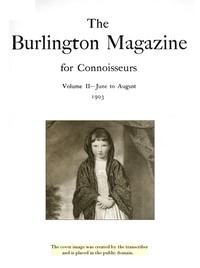
The Burlington magazine : for connoisseurs. vol. II—June to August by Various
Let's be clear from the start: this isn't a book with a plot. 'The Burlington Magazine, Vol. II—June to August 1903' is exactly what it says on the spine—three monthly issues of a prestigious art journal, bound together. There's no single story, but there is a fascinating narrative that emerges from the pages. You flip from a detailed analysis of a Persian miniature to a heated letter to the editor about museum acquisitions, then to a review of the latest Royal Academy summer show. It’s the intellectual rhythm of a bygone art world, quarter by quarter.
The Story
The 'story' is the season itself. June starts with previews and plans. By July, the major exhibitions are open, and the critics are weighing in—sometimes with surprising venom or praise. August often brings travelogues from correspondents in Italy or France, reporting on discoveries abroad. Woven throughout are obituaries of artists, announcements of sales (where you see what a Titian actually cost back then!), and scholarly articles that were cutting-edge in 1903. Reading it cover-to-cover, you witness a community building the canon of art history in real time, deciding what matters and what will be remembered.
Why You Should Read It
I loved it for the perspective. It completely shakes up how we see art history. We look back with a settled timeline: these movements happened, these artists are important. But here, it's all up for debate. Reading a critic dismiss a painter who later becomes famous, or get wildly excited about someone history has forgotten, is humbling and thrilling. The ads are also a hilarious and poignant window into daily life—everything from offers for 'high-class photographic reproductions' of old masters to tonics 'for nervous exhaustion.' It makes the past feel real, messy, and opinionated, not just a series of dry facts.
Final Verdict
This is a perfect, quiet read for a specific mood. It's for the history nerd, the art lover who enjoys the backstory more than the spotlight, or anyone who loves primary sources. It's not a page-turner in the traditional sense, but it is a deeply absorbing immersion. If you've ever wandered through a museum and wondered about the conversations happening when those paintings were new, this volume lets you eavesdrop. Keep it by your bedside and dip in for an article or two at a time. You'll come away feeling like you've had a long, fascinating chat with the ghost of a very knowledgeable curator.
This is a copyright-free edition. You do not need permission to reproduce this work.
Emily Jones
1 year agoVery interesting perspective.
Robert Wilson
1 year agoFinally a version with clear text and no errors.
Melissa Ramirez
1 year agoVery interesting perspective.
Kimberly Davis
11 months agoI started reading out of curiosity and the arguments are well-supported by credible references. Exceeded all my expectations.




Nancy Scott
5 months agoAfter hearing about this author multiple times, the plot twists are genuinely surprising. A valuable addition to my collection.