
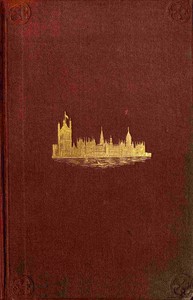
The life and works of Sir Charles Barry by Alfred Barry
Alfred Barry had a mission. As the third son of the famed architect Sir Charles Barry, he watched a controversy simmer for years after his father's death in 1860. The stunning Palace of Westminster, home to Britain's Parliament, was Barry's crowning achievement. But a persistent argument claimed that the real artistic genius belonged to Augustus Welby Northmore Pugin, the younger architect who supplied the breathtaking Gothic Revival details.
The Story
This book isn't a dry list of dates and buildings. It's a son's defense. Alfred Barry walks us through his father's life, from his early travels in Italy to his rise as a leading architect. He makes the case for Sir Charles as the true visionary—the man who conceived the overall plan, managed the epic project, and integrated Pugin's brilliant work into a cohesive whole. The heart of the story is this conflict over credit. Alfred presents letters, records, and his own personal memories to argue that history was beginning to forget his father's central role. He's not just writing a biography; he's correcting what he believes is a wrong.
Why You Should Read It
You get two incredible stories in one. First, you learn about the creation of an icon. The challenges of building on the Thames, the politics, the fires, the sheer scale of it all are captivating. Second, and maybe more compelling, is the human drama. Reading a biography by a devoted son gives you a unique, passionate, and admittedly one-sided perspective. You feel the family's pride and their frustration. It makes the historical figures feel real, flawed, and fiercely dedicated to their art. It's less about cold facts and more about legacy, reputation, and how we remember our heroes.
Final Verdict
This is a perfect pick for anyone who loves London, history, or a good family story. It's especially great if you enjoy seeing history from a personal angle, warts and all. You don't need to be an architecture expert; Alfred Barry explains things clearly. Just be ready to remember you're getting the 'Barry family version' of events. Pair it with a modern book about Pugin for the full picture, and you'll have a fantastic understanding of one of the greatest creative partnerships—and rivalries—of the 19th century.
Legal analysis indicates this work is in the public domain. Thank you for supporting open literature.
Barbara Rodriguez
11 months agoThe fonts used are very comfortable for long reading sessions.

Amanda Anderson
3 months agoFrom the very first page, the arguments are well-supported by credible references. Worth every second.