About 36 minutes
Cry from a Far Planet — Key Ideas to Explore
Other Worlds
8,101 recorded words. 0 minutes difference from this book's estimate.
View Gutenberg source #23799
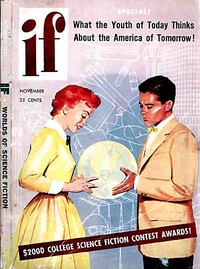
For The Very Secret Agent — A Closer Reading, the stored edition analysis reports 8,255 words, 36 min estimated reading time, and 1 detected text section.
The text analysis averages about 12.0 words per sentence, while the detected sections provide another way to judge how the source is divided.
Project Gutenberg metadata also associates the work with “Science fiction,” connecting these edition facts with the source record’s subject description.
Explore this collection
These alternatives are selected using recorded categories and estimated reading time.
About 36 minutes
Other Worlds
8,101 recorded words. 0 minutes difference from this book's estimate.
View Gutenberg source #23799About 36 minutes
Other Worlds
8,276 recorded words. 0 minutes difference from this book's estimate.
View Gutenberg source #26956About 35 minutes
Other Worlds
7,938 recorded words. 1 minutes difference from this book's estimate.
View Gutenberg source #26569Search stored excerpts and compare books → Choose by your preferences →
Choices use stored catalog measurements. Estimates vary with reading speed. A shared category is a catalog label, not a claim that two books have the same argument or literary quality.
Search reads excerpt text stored with this catalog and links to its associated Gutenberg record. The connection is stored in the site database; this tool does not recheck that every excerpt is word-for-word identical to that external record. Excerpt search does not cover every chapter and does not verify historical publication dates.
Catalog snapshot checked: 2026-09-26. Coverage: 96 public books, 96 available source excerpts.
Calculated from edition completeness, EPUB availability, text structure and catalogue metadata. Not a user rating.
Total of 100 points, scaled to a 2.5-5.0 range. Editions with an empty description or a missing EPUB file are not scored.
Public-domain source text
The source text is kept in the dedicated reader, separate from this catalogue record and its commentary.
Mari Wolf's 'The Very Secret Agent' (1954) opens with two aliens, Riuku and Nagor, orbiting Mars in a ship that 'didn't in the least resemble an Earth spaceship.' Their telepathic reconnaissance hits a wall: Earth's factory workers are 'too well shielded.' The story immediately establishes a dual perspective—the aliens' frustrated mission and the human drama below—by cutting from their conversation to a bar where Pete Ganley waits for Alice Hendricks. The narrative voice is brisk, alternating between the aliens' clinical frustration and the humans' colloquial anxieties, with a theremin-heavy jukebox underscoring the setting.
The story's voice is split between two registers. The aliens speak in clipped, strategic exchanges: 'Have you tried contacting everyone? What about the workers?' Their dialogue is goal-oriented, punctuated by Nagor's grim ultimatums. In contrast, the human scenes lean into interior monologue and free indirect discourse. When Pete thinks, 'Why, he asked himself irritably, couldn't those scientists figure out some way to keep the shields up longer than a week?' the narration merges with his irritation. Wolf uses this shift to mirror the telepathic intrusion: Riuku's thoughts are rendered in italics, as when he pushes Alice's mind: 'Stop thinking about Susan, you biological schizo.' The aliens' telepathy is not omniscient—it requires emotional leverage, and the narrative reflects that by staying close to whichever consciousness is being probed.
The secret weapon is never described in full; it remains a MacGuffin whose function is to drive the plot. What matters is how it is revealed: through Alice's manipulated curiosity. Riuku prods her to ask Pete about the 'voltage loose' in the Restricted Area, and Pete's explanation—'That's the control panel for one of the weapons'—comes only after she pours him drinks and he relaxes. The weapon's nature is secondary to the act of extraction. Wolf emphasizes the emotional cost: Alice's jealousy ('You'd rather have her!') is a tool Riuku exploits, and Pete's shift from 'her Petey' to 'Susan's Pete' marks the erosion of their relationship. The narrative pace accelerates as the telepathic probe succeeds, only to be interrupted by a police spotlight—a cliffhanger that leaves the weapon's full nature undisclosed.
Wolf structures the story as a series of short, intercut scenes. The aliens' ship is a static frame, while the human scenes move from bar to copter to factory gate. Time is compressed: Riuku's mission has a deadline—'another ship's gone'—and the humans' shield-boosting schedule creates weekly windows of vulnerability. The narrative mirrors this urgency with short paragraphs and rapid dialogue tags. When Riuku finally extracts the weapon's secret, the scene is truncated by the police arrival, leaving the reader in suspense. The excerpt ends mid-sentence, suggesting that the story's climax is interrupted, not resolved. This pacing choice emphasizes the precariousness of the aliens' espionage and the humans' obliviousness, with the weapon's true nature remaining tantalizingly out of reach.
Readers should note that the excerpts cover only the first half of the story; the weapon's full description and the outcome of the police intervention are not included. Wolf's technique of embedding telepathic intrusion within domestic drama rewards attention to shifts in narrative distance—when the italics appear, the aliens are actively manipulating. The story's 1954 publication in If Worlds of Science Fiction places it in a period when Cold War anxieties about infiltration and secrecy were common, but the text itself does not explicitly engage with those themes.
There’s something achingly human about the spies in The Very Secret Agent — how they fumble with emotion they can’t quite name. That same quiet ache lingers in The Double Spy — Text and Context, though from the other side of the mirror. It made me wonder, gently, which of us is really being watched in these old stories. A thought I keep turning over, unhurried.
Use these questions to collect your thoughts before moving on.









