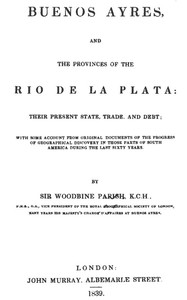
Buenos Ayres and the Provinces of the Rio de La Plata by Sir Woodbine Parish
Okay, let's be clear from the start: this isn't a page-turning thriller. Buenos Ayres and the Provinces of the Rio de La Plata is Sir Woodbine Parish's detailed report to the British government, written after his five-year posting as a diplomat. But don't let that official description fool you. It's one of the most vivid snapshots of a country being born that you'll ever read.
The Story
There's no traditional plot. Instead, Parish acts as our guide through the Argentina of the 1820s. The country had just broken free from Spain, and the world was watching. His mission was to understand this new place—its people, its politics, its economy, and its land. The 'story' is his journey of discovery. He describes bustling Buenos Aires, a city full of ambition and European fashions. Then he ventures out onto the endless pampas, the grassy plains where the legendary gauchos lived a completely different, semi-nomadic life. He details the fledgling government's struggles, the potential for huge agricultural wealth, and the constant threat of internal conflict. The narrative is the tension between the raw, wild beauty of the country and the immense challenge of building a stable nation from scratch.
Why You Should Read It
You read this for the atmosphere and the insight. Parish is a brilliant observer. He doesn't just give dry statistics; he paints pictures with words. You can feel the dust of the pampas, see the rough hospitality of the ranches, and sense the political unease in the city's cafes. What I found most compelling was his outsider's perspective. He's clearly impressed by the resourcefulness of the people and the potential of the land, but he's also a practical diplomat who sees the hurdles clearly. It's like watching someone put together a puzzle where half the pieces are still missing. His account is free from modern political bias—it's just a smart man trying to understand a complex moment in time.
Final Verdict
This book is a niche treasure. It's perfect for history buffs, armchair travelers, and anyone who loves primary sources. If you enjoyed books like Tocqueville's Democracy in America for its outsider analysis, you'll appreciate this. It's also fantastic for anyone with an interest in Latin American history or the tango culture of Buenos Aires, as it shows the roots of that society. It's not a light read, but it's a rewarding one. Think of it as the most detailed, thoughtful travel blog from 200 years ago. You come away feeling like you've actually visited a place that no longer exists.