
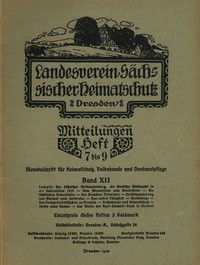
Landesverein Sächsischer Heimatschutz — Mitteilungen Band XII, Heft 7-9…
Let's be clear from the start: this isn't a novel. Landesverein Sächsischer Heimatschutz — Mitteilungen Band XII, Heft 7-9 is exactly what the title says—a bound volume of three consecutive monthly newsletters from 1933. Published by the Saxon Heritage Society, its pages are filled with the society's business: meeting minutes, reports on fundraising for monument preservation, detailed studies of traditional farmhouse styles, and notes on regional folk songs and crafts.
The Story
There is no plot, but there is a powerful narrative tension. The year is 1933. While these reports meticulously discuss the proper thatching of roofs and the cataloging of pottery shards, a seismic political shift is happening across Germany. The society's stated goal is the 'protection of the Saxon homeland' in the face of modern industry and change. Reading their dry administrative language now, you can't help but wonder about the unspoken pressures. Who are these members? What conversations happened after the minutes were closed? The 'story' is the quiet, dedicated work of preservation unfolding against a backdrop of gathering national storm clouds. It's history in its most raw, unedited form.
Why You Should Read It
I found this absolutely fascinating. It offers a ground-level view of history that big political narratives often miss. There's something profoundly human and almost poignant about the focus on saving a specific fence design or documenting a dying dialect. It shows what people cling to when the familiar world seems to be dissolving. You're not getting analysis or hindsight—you're getting the primary source, the original worried hum of a culture trying to define itself. It makes you think deeply about what 'heritage' really means and who gets to decide what parts of it are worth saving.
Final Verdict
This is a niche read, but a rewarding one. It's perfect for history buffs, especially those interested in social history or Weimar/early Nazi Germany, who want to move beyond textbooks. It's also great for anyone interested in folklore, cultural preservation, or archival research. If you need a fast-paced plot, this isn't it. But if you like the idea of being a historical detective, reading the subtext of meeting notes from a pivotal year, you'll find this volume strangely gripping. Think of it as a time capsule, not a thriller.
This content is free to share and distribute. Knowledge should be free and accessible.
James Johnson
11 months agoThis book was worth my time since the plot twists are genuinely surprising. Absolutely essential reading.
Jackson Gonzalez
1 year agoFrom the very first page, the narrative structure is incredibly compelling. Don't hesitate to start reading.
Dorothy Wilson
11 months agoCompatible with my e-reader, thanks.






Mason Jackson
3 months agoFrom the very first page, the pacing is just right, keeping you engaged. A true masterpiece.