About 66 minutes
Vigorish — Text and Context
Machines Invention
15,015 recorded words. 19 minutes difference from this book's estimate.
View Gutenberg source #24382
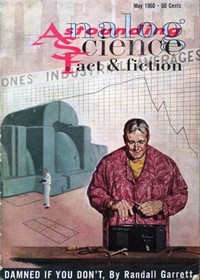
The catalog record for Damned If You Don't — Story, Setting & Ideas provides practical reading context through 19,468 words, 1 hr 25 min estimated reading time, and 2 detected text sections.
The text analysis averages about 13.2 words per sentence, while the detected sections provide another way to judge how the source is divided.
Project Gutenberg metadata also associates the work with “Science fiction,” connecting these edition facts with the source record’s subject description.
Explore this collection
These alternatives are selected using recorded categories and estimated reading time.
About 66 minutes
Machines Invention
15,015 recorded words. 19 minutes difference from this book's estimate.
View Gutenberg source #24382About 54 minutes
Machines Invention
12,321 recorded words. 31 minutes difference from this book's estimate.
View Gutenberg source #24054About 52 minutes
Machines Invention
11,860 recorded words. 33 minutes difference from this book's estimate.
View Gutenberg source #22869Search stored excerpts and compare books → Choose by your preferences →
Choices use stored catalog measurements. Estimates vary with reading speed. A shared category is a catalog label, not a claim that two books have the same argument or literary quality.
Search reads excerpt text stored with this catalog and links to its associated Gutenberg record. The connection is stored in the site database; this tool does not recheck that every excerpt is word-for-word identical to that external record. Excerpt search does not cover every chapter and does not verify historical publication dates.
Catalog snapshot checked: 2026-09-26. Coverage: 96 public books, 96 available source excerpts.
Calculated from edition completeness, EPUB availability, text structure and catalogue metadata. Not a user rating.
Total of 100 points, scaled to a 2.5-5.0 range. Editions with an empty description or a missing EPUB file are not scored.
Public-domain source text
The source text is kept in the dedicated reader, separate from this catalogue record and its commentary.
The story opens with a wrecked laboratory and an inventor, Sam Bending, struggling to control his temper. The description of the vandalism is methodical: leads cut, equipment shoved aside with care to avoid harming the vandal. The missing Converter is the focus, and Bending's physical description—six foot three, three hundred pounds, a forty-eight size jacket—underscores his potential for violence. The narrative voice is wry, noting that his thoughts would be unfair to his memory, and that his folded hands are not prayer but restraint. This tension between explosive anger and deliberate control sets the tone for a story about power, both mechanical and personal.
The lab wrecking is not random. The narrative emphasizes that the vandal knew his way around a laboratory: leads were cut carefully, equipment was shoved aside with care to avoid damaging the shover. The intruder knew exactly what he wanted and how to get it. This precision contrasts with the mess left behind, suggesting a professional job rather than simple destruction. The missing Converter is the key, and Bending's reaction—a slow, deliberate calming of his rage—mirrors the careful, workmanlike approach of the vandal. The story thus sets up a puzzle: who has the expertise and motive to steal a device that could change the world?
Sam Bending's size is repeatedly emphasized: six foot three, three hundred pounds, a forty-eight size jacket. His physical presence is a constant factor in his interactions. He must consciously control his temper to avoid homicide charges. When he confronts the supposed FBI agents, he frisks them with Army-learned efficiency, and the narrative notes that the two men together don't outweigh him by more than fifty pounds. This physical dominance creates a tension between his potential for brute force and the need for restraint. The story uses his size to ground the conflict in a very tangible, bodily reality, making the intellectual struggle over the Converter feel immediate and personal.
Bending's initial assumption that the men following him are from Power Utilities is quickly overturned when they prove to be genuine FBI agents. The agents themselves admit they don't know why they were told to pick him up. This moment of misidentification highlights a theme of uncertain authority. Bending's suspicion of corporate suppression is met with a federal presence that is equally opaque. The story thus questions who holds power and knowledge. The agents' calm demeanor and Bending's apology create a shift from confrontation to confusion, leaving the reader wondering what larger forces are at play. The FBI's involvement suggests the stakes are higher than a simple theft.
The excerpts end with Bending agreeing to go with the agents, leaving his car unguarded. The story's title, drawn from a Calvinist epigraph, hints at a no-win situation. Readers should pay attention to how the narrative balances Bending's physicality with the intellectual puzzle of the Converter, and how the theme of suppressed invention is handled without resorting to easy answers. The story rewards attention to its careful construction of tension and its wry, understated voice.
That story’s weary inventor, staring at his wrecked lab in 1961, kept circling back to a quiet dread I couldn’t shake. It wasn’t the theft itself, but the sense that some doors stay locked on purpose. It reminded me of the patient unease in The Dark Door — Background and Themes—how both worlds hum with the same stubborn question about what we’re not meant to know.
Save your reaction, strongest insight, and memorable passage.