About 85 minutes
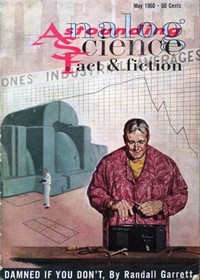
Damned If You Don't — Story, Setting & Ideas
Machines Invention
19,468 recorded words. 152 minutes difference from this book's estimate.
View Gutenberg source #24064
The source record for The Impossibles — Reading Companion measures this digital text at 54,383 words, 3 hr 57 min estimated reading time, and 6 detected text sections.
The text analysis averages about 10.1 words per sentence, while the detected sections provide another way to judge how the source is divided.
Project Gutenberg metadata also associates the work with “Science fiction,” connecting these edition facts with the source record’s subject description.
Explore this collection
These alternatives are selected using recorded categories and estimated reading time.
About 85 minutes
Machines Invention
19,468 recorded words. 152 minutes difference from this book's estimate.
View Gutenberg source #24064About 66 minutes
Machines Invention
15,015 recorded words. 171 minutes difference from this book's estimate.
View Gutenberg source #24382About 54 minutes
Machines Invention
12,321 recorded words. 183 minutes difference from this book's estimate.
View Gutenberg source #24054Search stored excerpts and compare books → Choose by your preferences →
Choices use stored catalog measurements. Estimates vary with reading speed. A shared category is a catalog label, not a claim that two books have the same argument or literary quality.
Search reads excerpt text stored with this catalog and links to its associated Gutenberg record. The connection is stored in the site database; this tool does not recheck that every excerpt is word-for-word identical to that external record. Excerpt search does not cover every chapter and does not verify historical publication dates.
Catalog snapshot checked: 2026-09-26. Coverage: 96 public books, 96 available source excerpts.
Calculated from edition completeness, EPUB availability, text structure and catalogue metadata. Not a user rating.
Total of 100 points, scaled to a 2.5-5.0 range. Editions with an empty description or a missing EPUB file are not scored.
Public-domain source text
The source text is kept in the dedicated reader, separate from this catalogue record and its commentary.
The Impossibles opens with a protagonist who is not heroic but hungover. The first chapter presents Malone curled on a sidewalk, drifting into a fantasy of romantic conquest and physical perfection—"seven feet tall and superbly muscled"—that is immediately undercut by the reality of his hangover. This contrast between aspiration and physical misery sets the tone for the novel's blend of sardonic humor and genre conventions.
Malone's internal monologue is the primary vehicle for characterization. He awards himself medals for getting out of bed and makes mental notes to apologize to Boyd for past roughness. The narration lingers on his physical suffering with a comic precision: sunlight is described as "searing its way through the face's closed eyelids," and he fantasizes about mausoleums as "nice, cool, dark places." This self-deprecating voice, full of exaggerated self-pity and wry observation, establishes a protagonist who is both unreliable and endearing.
The authors employ an extended metaphor to describe sunlight's journey from the sun to Malone's hotel room, tracing photons through space, the ionosphere, ozone, and finally a window. This passage, which spans several paragraphs, personifies light as an epic traveler whose "million-year epic" ends by "illuminating a face" that "responded with something less than pleasure." The technique defamiliarizes a mundane experience, turning a hangover into a cosmic event. It also showcases the authors' willingness to pause plot for stylistic flourish.
Despite the catalog subject "Psychic ability," the excerpts focus on ordinary details: a hangover, a forgotten show called The Hot Seat, a girlfriend named Dorothy. Malone's psychic abilities are not mentioned in the provided text. This suggests the novel grounds its speculative elements in quotidian reality. The contrast between the extraordinary (the FBI's involvement with psychic phenomena) and the banal (Malone's struggle to wake up) is a deliberate structural choice, likely used to make the fantastic feel plausible.
The prefatory material, written in a shared first-person voice, describes the book as written "in six days" and includes playful biographical notes about the authors' hobbies ("leaping to conclusions"). This irreverent tone carries into the novel. The narration's willingness to mock its protagonist and indulge in digressions suggests a collaborative sensibility that prioritizes entertainment over strict plotting. Readers should expect a voice that is knowingly clever, occasionally self-indulgent, and always aware of its own absurdity.
The Impossibles rewards attention to its prose style and narrative voice. The authors' choices—from the extended sunlight metaphor to Malone's self-deprecating interiority—create a distinctive texture that distinguishes this novel from more earnest science fiction. Readers may find that the pleasure of the book lies less in its plot than in the sardonic, playful sensibility that shapes every sentence.
Reading about the protagonist’s sardonic voice, I remembered my own dry grin during a long bus ride, the way humor kept a strange day bearable. It wasn’t the same plot, but the tone felt kin to something in Vigorish — Text and Context, which once made me pause mid-page, simply nodding at the page’s quiet handling of life’s odd edges. A familiar companionship, really.
Your answers remain private and are stored only in this browser.